The Value of Court Reporting in Ensuring Accurate Legal Proceedings
Court reporting is an important part of the lawful system. It supplies a unbiased and accurate record of court room tasks. This documentation is essential for charms and legal research, ensuring that every spoken word is recorded accurately. The stability of lawful process depends heavily on these records. The function of innovation and developing methods elevates questions concerning the future of court reporting and its impact on justice. What modifications lie in advance?
The Role of Court Reporters in the Legal System
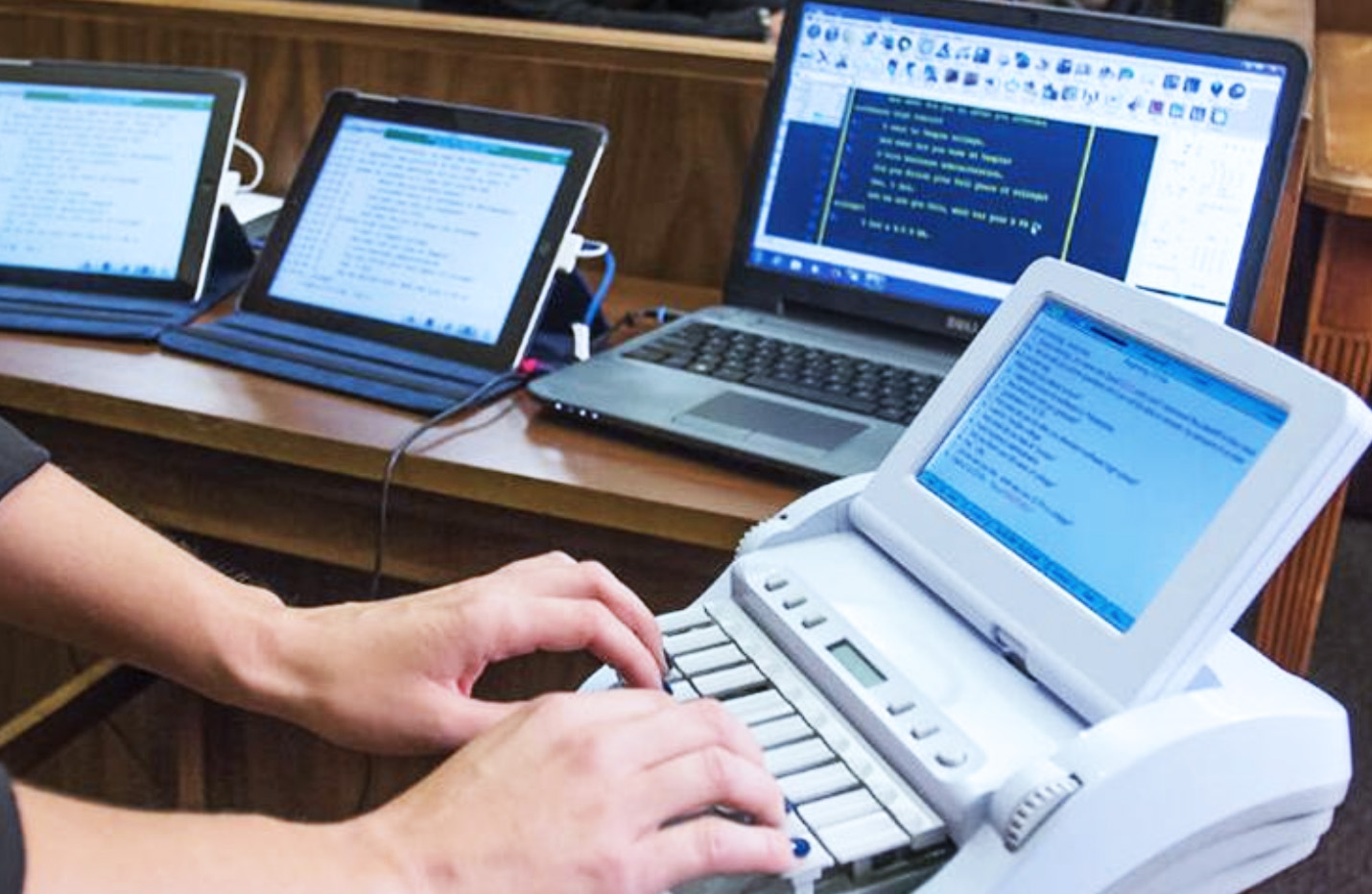
Stenotype reporter play a crucial function in the lawful system by offering accurate and unbiased transcripts of process. Their job warranties that court room discussions, witness testimonies, and legal arguments are faithfully documented, functioning as an official document for future reference. This documents is important for charms, legal research study, and preserving the stability of judicial procedures. Stenotype reporter are trained experts knowledgeable in stenography and numerous recording innovations, allowing them to capture spoken words with precision. They have to possess an extensive understanding of lawful terminology and court room procedures, guaranteeing that their records meet the requirements called for by the judicial system. Furthermore, they might offer real-time transcription services, enabling judges and attorneys to access details instantaneously throughout procedures. By fulfilling these obligations, court press reporters assist in transparency, accountability, and the fair management of justice, therefore enhancing the fundamental concepts of the lawful system.
Guaranteeing Accuracy in Transcription
Accuracy in transcription is extremely important for keeping the stability of legal proceedings. Stenotype reporter carefully catch every word talked during hearings, trials, and depositions, assuring that the official document mirrors real dialogue and exchanges that happen. This accuracy is crucial, as also small errors can result in substantial misunderstandings or misconceptions of the law.
To attain this level of precision, stenotype reporter utilize numerous strategies, consisting of active listening and the usage of specialized shorthand approaches. Constant training and experience with lawful terms additionally enhance their capability to create dependable transcripts.
Furthermore, the confirmation procedure is important; press reporters usually assess their records for possible inconsistencies prior to final submission. This diligence not only maintains the top quality of lawful documents however also supports the judicial procedure, enabling courts and attorneys to reference specific records when choosing. Eventually, exact transcription fosters rely on the legal system and guarantees that justice is served.
The Influence of Modern Technology on Court Reporting
As innovation proceeds to advance, its influence on court reporting has actually come to be progressively significant. Digital recording systems and speech recognition software have actually changed conventional practices, supplying brand-new tools for recording talked dialogue. These developments enhance performance and availability, making it possible for much faster transcription and real-time reporting. Furthermore, cloud-based systems facilitate smooth sharing of transcripts, boosting partnership amongst legal professionals.

Inevitably, while modern technology enhances the rate and ease of access of court reporting, it emphasizes the need for human oversight to keep the high quality and precision essential for lawful procedures. As the field remains to adapt, the integration of innovation will certainly play an essential duty fit the future of court reporting.
The Value of Discretion and Honesty
Confidentiality and honesty are basic concepts that underpin the method of court reporting in legal proceedings (durham court reporting). Court reporters are entrusted with sensitive info, needing them to preserve discretion and secure the personal privacy of all celebrations involved. This privacy fosters a trusting environment where plaintiffs and witnesses can talk freely, ensuring that the legal procedure is reasonable and simply
Honesty is just as important; stenotype reporter need to offer exact and unbiased transcripts, working as the click this link authorities record of the proceedings. Any type of lapse in integrity can bring about false impressions, possibly impacting situation results and undermining the judicial system.
Future Fads in Court Reporting
The landscape of court read the article reporting is advancing in action to technical advancements and the transforming needs of the legal occupation. Emerging investigate this site trends consist of the integration of expert system and real-time transcription solutions, which enhance efficiency and precision. Stenotype reporter are progressively making use of digital tools, such as cloud-based systems, permitting for seamless collaboration among lawful teams and easier access to records.
Furthermore, the surge of remote court proceedings has actually motivated the growth of specialized training for press reporters in online atmospheres. This shift not just adjusts to the demands of a globalized lawful landscape however also addresses challenges presented by geographical barriers.
In addition, the focus on availability is driving innovations in transcription styles, making certain that lawful files deal with diverse audiences. In general, the future of court reporting is characterized by a blend of traditional abilities and contemporary technology, positioning press reporters as vital players in the legal procedure.
Regularly Asked Inquiries
What Credentials Are Required to Come To Be a Court Press Reporter?
To end up being a stenotype reporter, people commonly need a senior high school diploma, specialized training in court reporting, efficiency in shorthand or voice writing, and qualification or licensing, depending on the jurisdiction and particular job demands. - durham court reporting
Exactly How Do Court Reporters Maintain Their Skills With Time?
Stenotype reporter keep their skills with time through continual education and learning, method, and interaction with professional organizations. They commonly go to workshops, utilize sophisticated technology, and get involved in certification programs to enhance their effectiveness and adjust to evolving requirements.
What Difficulties Do Court Reporters Face in Their Career?
Court press reporters experience numerous obstacles, including taking care of high-pressure settings, adjusting to diverse accents and languages, keeping technological proficiency, ensuring accuracy under limited deadlines, and taking care of mentally charged testimonies that might impact emphasis and efficiency.
Are Court Reporters Associated With Other Legal Settings Besides Courtrooms?
Court reporters are certainly included in different lawful settings past court rooms, including depositions, adjudication hearings, and management process. Their experience assurances accurate records in these settings, adding to the quality and dependability of lawful paperwork.
Exactly How Do Court Reporters Handle Stressful Situations During Proceedings?

Stenotype reporter manage stressful scenarios by preserving focus, utilizing efficient time administration abilities, and using their training to continue to be tranquil. They usually practice deep breathing and employ techniques to reduce disturbances, guaranteeing accurate documentation under stress.
Court reporting is an important element of the legal system. Court press reporters play a vital function in the legal system by giving objective and precise transcripts of proceedings. Eventually, while modern technology boosts the rate and availability of court reporting, it highlights the demand for human oversight to keep the top quality and accuracy vital for lawful process. Confidentiality and integrity are basic concepts that underpin the technique of court reporting in legal procedures. Court reporters are undoubtedly entailed in numerous legal settings past courtrooms, including depositions, settlement hearings, and management proceedings.